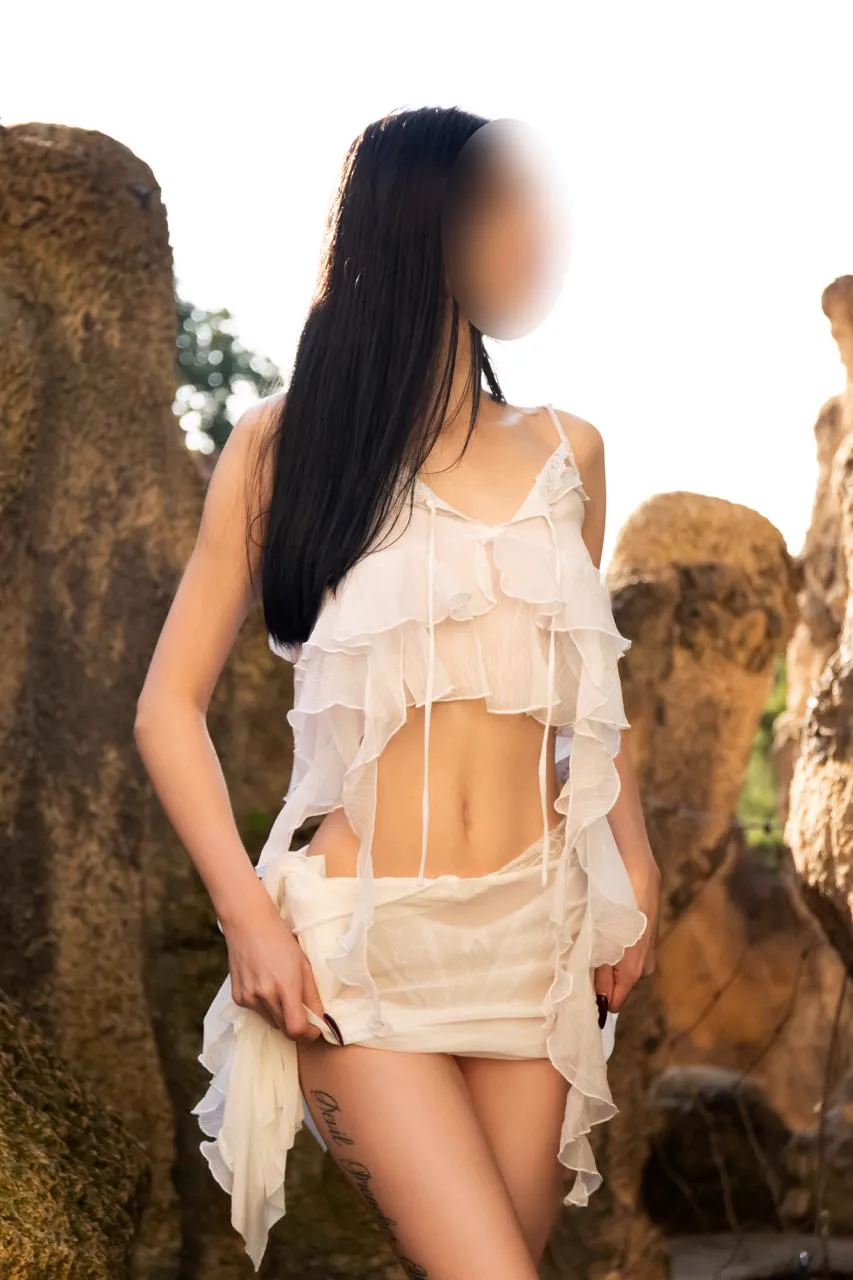
Contemporary art is where Margo goes to think, and if you walk a gallery with her you will understand her faster than any bio can manage. She does not perform opinions in front of paintings. She stands, considers, offers one quiet observation that reframes the whole room, and moves on. Company like that is rare at any age; she is thirty one and has clearly been practising.
The rest of her portrait: 166 cm, slim, long straight dark brown hair, brown eyes, and a vintage-leaning elegance that makes hotel lounges look as if they were designed around her. Piano is a private discipline she keeps up without an audience, a devotion she shares with Karolina, and her garden is the one subject that reliably breaks her composure into open enthusiasm. Refined and mysterious are the words guests reach for, though the mystery is really just calm: she is never in a hurry, never scattered, never checking the time. An evening with her runs at the pace of a good exhibition, one worthwhile thing after another, no filler between them. Vintage suits her because it has already survived its trends, a quality she admires in people as well. August belongs to the garden; the rest of the year, the evenings are hers to compose.
Margo receives her bookings from Oud-Zuid, placing her minutes from the museum quarter and the park-side hotels, and she is a natural match for guests visiting the city for its collections; she and Angelika split our art conversations between them. Reaching her is a single message on WhatsApp with a time and a place, answered with a confirmation and followed by nothing at all, no thread kept, no name stored, no future reminder that this particular evening ever asked to exist. That, she would say, is how the best evenings prefer it.